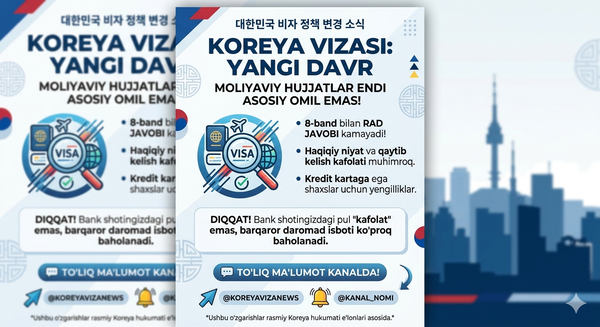

Visa Tax Risk
8/10/2026
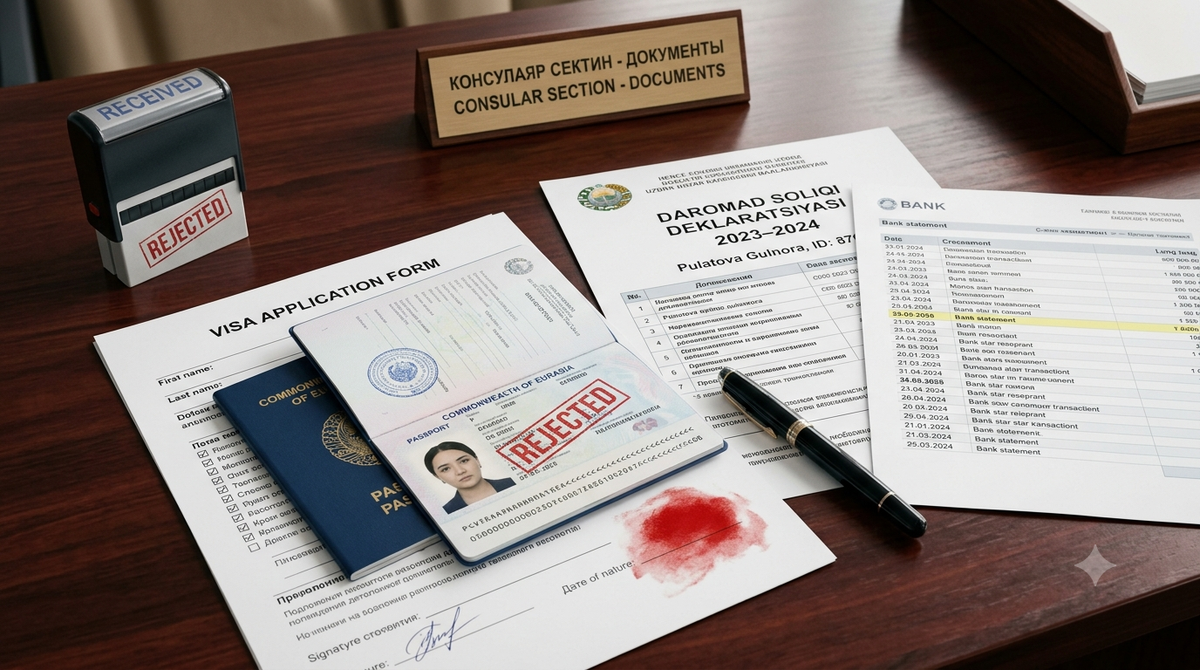
Many students and applicants face a common issue: their documents are completely legal and verified in official state databases (soliq.uz), yet the embassy still rejects their visa application. This issue frequently occurs when applicants use retroactive tax declarations ("pereotchyot") for non-working parents to simulate 12 months of income right before applying.
While the documents are technically valid, consular officers often deny visas due to three major red flags:
1. Sudden 1-Year Work History: Retroactive tax filing automatically extends the parent's work history on my.mehnat.uz by one year. Consular officers quickly spot the anomaly when someone with no prior formal employment suddenly acquires a full year of continuous work history just before a visa application.
2. Mismatch in Bank and Pension Activity: Real employment involves monthly salary deposits into a bank account with corresponding periodic tax and pension (INPS) deductions. Retroactive filing results in lump-sum tax payments for the past 12 months without any historical monthly bank transactions to support it.
3. Loss of Credibility (Genuine Applicant Criterion): Embassies evaluate whether an applicant is genuine and financially stable. If a consul determines that income was artificially generated, it is treated as an attempt to mislead the embassy, leading to a refusal under section 214(b) or similar clauses (unreliable financial source / insufficient ties).
Recommended Actions:
Avoid Last-Minute Schemes: Do not attempt to reconstruct 12 months of income shortly before applying.
Document Real Income: Prove actual sources of livelihood, such as self-employment registrations, agriculture, livestock, or property leases, backed by cadastral documents and contracts.
Ensure Natural Financial Flow: Bank accounts and card transactions should demonstrate organic activity over a period of 6 to 12 months.